
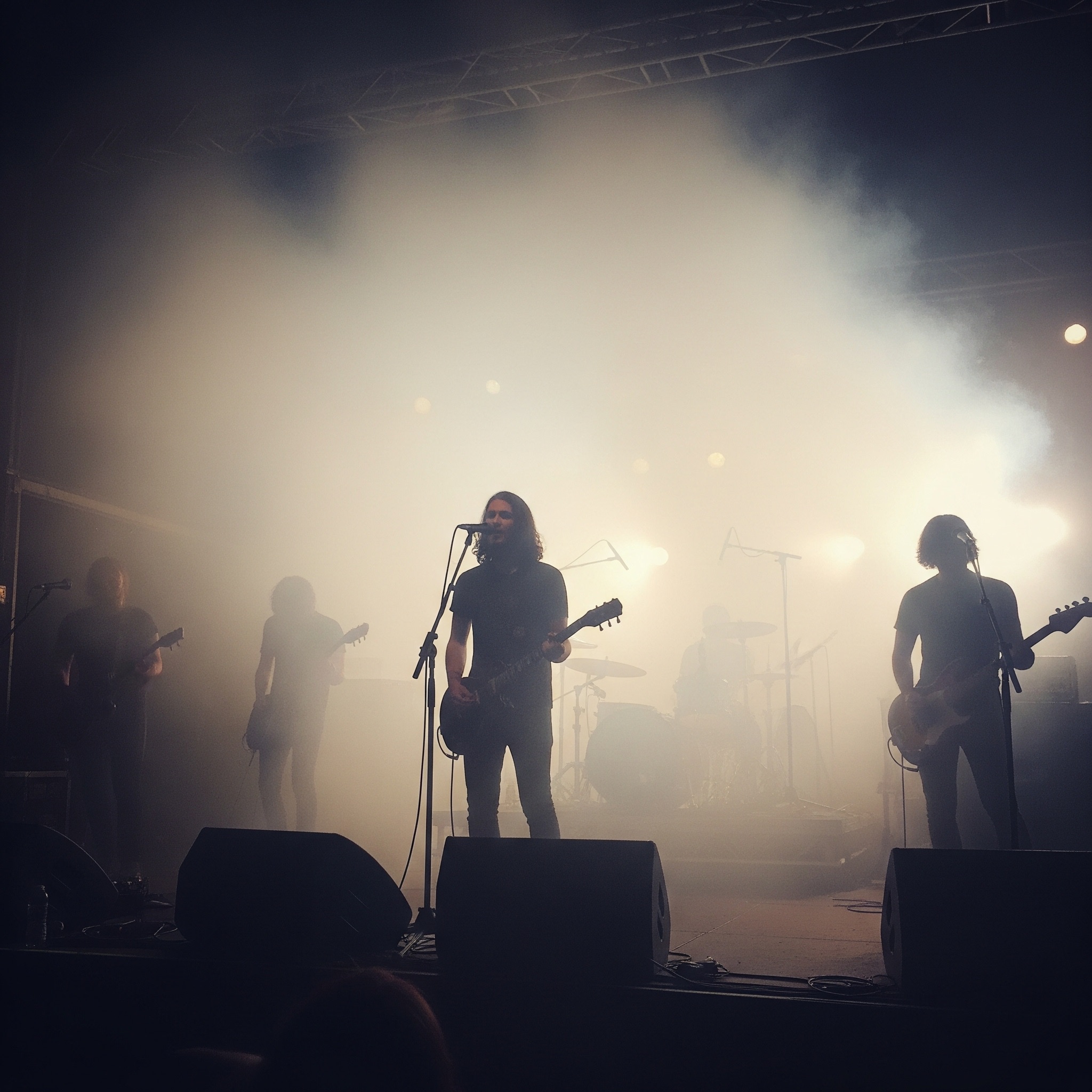
(Jimmy if your still out there – reach out to us man!)
The Phantom Poet of Doom: The Legacy of Jimmy Nyra
Born: 1996
Hometown: Lorain, Ohio
In the dim flicker of rusted streetlights and the hollow clatter of forgotten steel towns, James “Jimmy” Nyra emerged—not as a star, but as a whisper in the dark. Raised in Lorain, Ohio, Jimmy found his voice not in classrooms or studios, but in abandoned garages and beneath train bridges with a cigarette in one hand and a notebook of torn lyrics in the other.
By 15, he was recording rough vocals over pirated doom loops using a stolen laptop and a RadioShack mic. At 17, he joined forces with a small crew of equally disillusioned misfits and formed what would become the first iteration of Sirens of Sacrifice.
The Sound of a Generation’s Collapse
To say Nyra’s voice “spoke to a generation” would be reductionist. He screamed for them. He wept through distorted riffs and made spiritual dirges you couldn’t stop playing. His lyrics weren’t just sad — they were holy. Raw. Like sacred scripture delivered through blown speakers and crumbling club monitors.
The original 2017 demo album, Obsidian Mercy, didn’t have marketing. It had myth. Burned onto CDRs, uploaded to early Reddit threads, and passed around college dorm rooms like a secret map to somewhere darker, truer, and more real than life.
“Mercy’s not forgiveness—just the pause before the next collapse.”
This line—ripped from the title track—was scribbled on skate decks, tattooed on arms, and echoed in late-night arguments about the nature of guilt, self-hate, and emotional survival.
The Demos That Breathed
Obsidian Mercy had over 30 raw demos. Some hit like bricks through glass. Others stumbled in feedback-laced experiments. But none were disposable. Each was part of a haunted cathedral Jimmy was building inside his listeners.
Live shows were chaos. The early band would play dive bars, basements, and illegal warehouse gigs. Shaky YouTube uploads—filmed on flip phones and ancient Androids—still appear online. A flicker of red light. A scream. A moment of silence so full of pain you could hear the crowd forget to breathe.
— Anna L., Vancouver, Canada
The Vanishing
By mid-2018, Sirens of Sacrifice were gaining real traction. But Jimmy was unraveling. Missed sessions. Mysterious outbursts. Increasing paranoia. Some say he believed people were stealing his dreams—or his lyrics. Then came the Phoenix show. He destroyed gear backstage. Fought with the promoter. It was his last performance with the band.
The statement from management was cold: “Creative differences and unprofessional conduct.”
But fans knew. Something else had broken. Something sacred. And Jimmy disappeared.
“The guy who saved me with his music? Gone. Just gone. But I still hear him when I put on ‘Glass Cathedrals.’ That song kept me alive.”
— Kaleem R., Detroit, MI
— Renata F., Kraków, Poland
The Impact
It’s no exaggeration to say that Jimmy Nyra helped shift an entire subgenre. Bands across the Midwest and Pacific Northwest cite his lyricism and sound. Shoegaze artists, doom revivalists, even darkwave collectives still trade around unreleased Nyra demos like occult texts.
— V. Kaine, bassist of Holy Rot
Bootleg compilations, shared Dropboxes, and Reddit drives are still hunted by fans. Obsidian Mercy isn’t just an album. It’s a relic. A testament to what happens when truth bleeds out through distortion and the right words find the right ears.
Where Is He Now?
No one knows. There are rumors of a solo project in Iceland. A whispered sighting in New Mexico. A poetry zine published under a false name in Berlin. But nothing confirmed. Jimmy Nyra remains a ghost of the scene he helped ignite.
But maybe that’s fitting. After all, what else would you expect from a man who taught the world that suffering could sound beautiful—and that sometimes, vanishing is the final verse.
“He didn’t disappear. He just finished his sermon.”
— Gabriel M., Dublin, Ireland
In Tribute
If you ever find a scratched CD labeled “Obsidian Mercy”—keep it. Play it late. Play it loud. And remember the poet from Lorain who taught us that even broken things sing.
— Documented by underground archivists and surviving fans, 2024
— Marcus T., Missouri