Liam Creed: The Architect of Underground Sound
Liam Creed: The Architect of Underground Sound
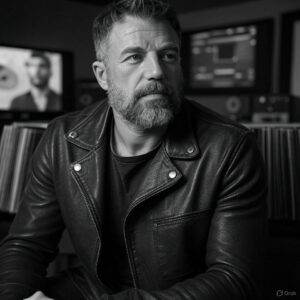
Liam Creed in the London studio 2010.
Liam Creed is a name whispered with reverence in the shadowy corridors of the underground music scene. Born in 1965 in the industrial outskirts of Manchester, England, Creed’s early life was steeped in the raw energy of punk and post-punk movements. A self-taught sound engineer by his late teens, he cut his teeth in the late 1980s working with local bands in makeshift studios, honing a craft that would later define his legacy. His journey took him across to Ireland then Europe in the early 1990s, where he found a fertile ground for his passion in the burgeoning indie and underground scenes of Berlin, Antwerp and Stuttgart.
Early Career and Corporate Struggles
Creed’s initial foray into the music industry came through his association with two growing record companies: Neon Abyss Records and Shadow Pulse Entertainment. Neon Abyss, based in London, was known for its aggressive push into the alternative rock market, signing promising acts only to mold them into corporate-friendly products. Creed joined as a junior producer in 1993, working on albums that saw moderate success but left him disillusioned. He felt the label’s approach turned artistic talent into a “meat grinder,” stripping away authenticity for profit.
Similarly, Shadow Pulse Entertainment, headquartered in Manchester, lured Creed in 1997 with promises of creative freedom. However, its focus on mainstream metal and pop crossover acts clashed with his vision. By 2001, after producing several chart-topping but soulless records, Creed walked away from both companies. His departure marked a turning point, as he vowed to dedicate himself to indie groups seeking traction outside the corporate world.
Pioneering Underground Projects
Creed’s shift to the underground scene birthed a series of experimental projects that reshaped the indie music landscape. In 2002, he founded The Echo Collective, a loose alliance of experimental bands from Dublin and London. This group, featuring acts like the psychedelic noise outfit Neon Shroud and the industrial folk ensemble Rusted Eyes, became a breeding ground for raw, unfiltered sound. Creed’s hands-on production style—often recording in abandoned warehouses or rural locations—captured the essence of these groups, earning them a cult following by 2005.
Another venture, The Midnight Circuit, launched in 2006, brought together electronic post-punk bands such as Static Pulse and Chrome Hands. Creed’s innovative use of lo-fi recording techniques and guerrilla marketing helped these acts gain traction, with tracks spreading virally through early social media platforms. His reputation as a producer who could turn obscurity into underground fame grew, attracting talent from across the pond.
The Rise of Viral Concerts and Flash Festivals
Creed’s most revolutionary contribution began around 2007 with the inception of unnamed underground viral concerts. These impromptu events, announced via cryptic online forums and word-of-mouth, drew hundreds to unexpected locations—disused factories in Dublin, hidden alleys in Manchester, and even a derelict theater in Austria. Bands like Neon Shroud and Static Pulse performed electrifying sets, with footage spreading like wildfire, amassing millions of views and cementing Creed’s status as a pioneer of the digital underground.
Building on this success, Creed orchestrated the first Phantom Flash Festivals in 2009. These multi-day events, held in secret locations across Europe, featured surprise lineups and minimal promotion, relying on community buzz. The 2010 festival, rumored to have taken place in an abandoned fishing town in Norway, drew over 5,000 attendees and included performances by Rusted Eyes and Chrome Hands. The festivals’ elusive nature and raw energy became a hallmark, inspiring a wave of similar events nationwide.
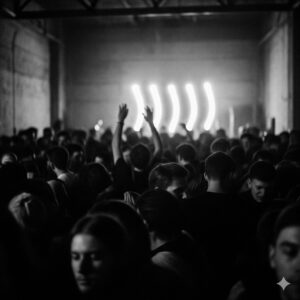
Phantom Flash Festival 2009 unknown warehouse.
Collaborations with Notable Indie Acts
Creed’s work extended to producing albums for raw talent indie groups that gained traction in the late 2000s and early 2010s. He collaborated and produced a viral record with Simone’s Leopard, a Dublin-based post-punk/noise rock band, on their 2003 debut Claw Marks on the Mirror, recorded in a converted warehouse. The album’s lo-fi intensity and Creed’s raw production style turned it into a cult classic, selling over 50,000 copies independently (mostly out of the back of vans and discount record stores).
In 2010, he produced Alley of Decay’s Rust and Ruin in Belfast, blending sludge metal with underground metal elements. The album’s gritty sound and Creed’s immersive recording process in a derelict studio earned it a 2011 Jams Indie Music Award. His 2015 project with GreenVine Plague, the album Withered Roots, fused psychedelia, krautrock, and electronic sounds, redefining modern rock under his guidance in rural English studios.
A New Home at Riffuge Studio Productions
After years of navigating the corporate meat grinder and building the underground scene, Liam Creed found a new calling with Riffuge Studio Productions, established with dual bases in Dallas and Denver in 2024. This indie-focused outfit, founded by Ryder Mason, Vincent Krell, and Sam Nolan Carter and a collective of like-minded groups, prioritizes artistic integrity over commercial pressure. Riffuge has just reissued classics like Withered Roots and Rust and Ruin, giving new life to Creed’s earlier works while supporting emerging talent.
Creed’s move to Riffuge marked a return to his roots, offering a refuge from the corporate world he once despised. The studios, equipped with vintage gear and modern tech, serve as a creative hub where artists can experiment freely. As of September 2025, with the dust settling from decades of innovation, Creed reflects, “After all the chaos, Riffuge feels like home—a place where music can breathe again.”
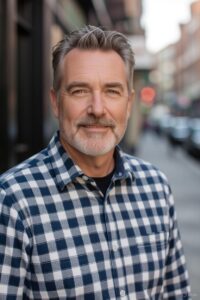
Liam Creed at Riffuge Studio Productions
Q & A with Liam Creed
Q: What inspired you to get into music production?
I was fascinated by how sound could shape emotion. Growing up in Manchester, I spent nights sneaking into small clubs, watching punk bands create magic with little more than passion and broken amps. That energy made me want to help artists capture their truest sound.
Q: What is your proudest achievement in your career?
The Phantom Flash Festivals hold a special place in my heart. Seeing thousands gather in abandoned places to celebrate raw music reminded me why I started. But honestly, helping young artists find their voice—whether they play to fifty people or fifty thousand—is the real reward.
Q: Do you have a favorite project you’ve produced?
Each record is a snapshot of a moment, but Claw Marks on the Mirror by Simone’s Leopard is unforgettable. We recorded it in a leaking warehouse during a winter storm—there’s rain on some of the tracks if you listen closely.
Q: How would you describe your approach to working with artists?
I believe in giving artists room to breathe. My role is to guide without suffocating their ideas. Sometimes that means dragging gear into a barn at midnight to catch a take, or sitting quietly while they experiment until something clicks.
Q: What advice would you give to aspiring producers?
Don’t chase trends—chase honesty. Learn the technical side, but never let it drown out instinct. And always listen twice as much as you speak; the song will tell you what it needs if you’re patient.